ASHWORTH

Financial Planning

  • Home
  • About Us
    • Stephen Buckle
    • Rachel Buckle
    • Wendy Bloomfield
    • Becky Evans
  • About You
    • People planning for retirement
    • People who have already retired
    • Business owners
  • What We Do
    • Financial Planning
    • How We Work
    • Investment Management
    • Solicitors & Accountants
  • Why choose us?
  • Case studies
  • News
  • Contact
  • Client Portal

Mar 23 2022

Everything you need to know about the 2022 spring statement

Against the backdrop of the continuing war in Ukraine, the chancellor has delivered his spring statement.

The war has contributed to uncertainty in the global economy, with the Office for Budget Responsibility (OBR) saying that, “given the unfolding situation in Ukraine, there is unusually high uncertainty around the outlook”.

Disruptions in global supply chains and the Ukraine war have led the OBR to revise downwards their forecast for growth over the next five years. The OBR now forecasts GDP to rise by 3.8% in 2022, down from its 6% growth forecast in last October’s economic and fiscal outlook.

The OBR then forecasts growth of 1.8% in 2023, 2.1% in 2024, 1.8% in 2025, and 1.7% in 2026.

Another current factor underpinning Rishi Sunak’s speech is rising inflation. According to the Office for National Statistics (ONS), inflation in February reached a 30-year high of 6.2%.

As the economic consequences of the Ukraine war continue to unfold, the OBR expects inflation to average 7.4% this year, with a further rise in energy costs in the autumn set to contribute further to the so-called “cost of living crisis”.

The chancellor tackled this issue first.

Fuel duty to be cut by 5p a litre until March 2023

As well as the £9 billion plan to help households pay around half of the April energy cap increase, unveiled by the chancellor in February, fuel duty will be cut for only the second time in 20 years.

Sunak cut the duty by 5p a litre until March 2023, calling it the “biggest cut to all fuel duty rates ever”. The reduction in duty will come into effect from 6 pm on 23 March 2022.

According to the Treasury, this cut represents a saving worth around £100 for the average car driver, £200 for the average van driver, and £1,500 for the average haulier, when compared with uprating fuel duty in 2022/23.

Cut in VAT on home energy installation

To further encourage households to invest in energy-efficient measures, and to keep energy costs down, Sunak announced an extension to the VAT relief available for the installation of energy-saving materials.

Taking advantage of Brexit freedoms, the chancellor announced that homeowners looking to install measures such as heat pumps or solar panels won’t pay any VAT (except for households in Northern Ireland).

The Treasury say that a typical family having rooftop solar panels installed will save more than £1,000 in total on installation, and then £300 a year on their energy bills.

A three-step tax plan for the rest of the parliament

Arguing that it’s “only Conservatives [who] can be trusted with taxpayers’ money”, Sunak unveiled a new three-point tax plan for the remainder of this parliament.

Calling it “a principled approach to cutting taxes”, the chancellor outlined the “direction of travel” of how he intends to reduce the tax burden responsibly and sustainably.

  1. Help families with the cost of living

As the NHS rebounds from the Covid-19 pandemic, and with the challenges facing the social care sector, Sunak argued that it was only right that the rise in National Insurance contributions (NICs) – which will become the new Health and Social Care Levy in 2023 – stays.

However, to reduce the tax burden on working people, the chancellor raised the National Insurance Primary Threshold and Lower Profits Limit, for employees and the self-employed respectively, from £9,880 to £12,570. This equalises the NICs and Income Tax threshold from July 2022.

This means that individuals will be able to earn up to £12,570 a year without paying any Income Tax or NICs.

This increase will benefit almost 30 million people, with a typical employee saving more than £330 in the year from July. Around 70% of NICs payers will pay less contributions, even after accounting for the introduction of the Health and Social Care Levy.

The Treasury say that around 2.2 million people will be taken out of paying Class 1 and Class 4 NICs and the Health and Social Care Levy entirely.

Sunak also announced that, from April, self-employed individuals with profits between the Small Profits Threshold and Lower Profits Limit will not pay Class 2 NICs. So, lower-earning self-employed people will be able to keep more of what they earn while continuing to build up NI credits.

2. Create conditions by encouraging higher growth

As the chancellor set out at the Mais Lecture in February, the government considers that a new culture of enterprise is essential to drive growth through higher productivity.

So, Sunak announced a range of measures aimed at businesses including:

  • The temporary £1 million level of the Annual Investment Allowance will be extended until 31 March 2023.
  • The business rates multiplier will be frozen in 2022/23.
  • A new temporary 50% relief in Business Rates for eligible retail, hospitality, and leisure businesses. It means the average pub, with a rateable value of £21,000, will save £5,200. The average convenience store, with a rateable value of £28,500, will save £7,000.
  • Business rates exemptions for eligible plant and machinery used in onsite renewable energy generation and storage will be brought forward to April 2022.
  • From April 2023, all cloud-computing costs associated with R&D, including storage, will qualify for R&D relief.
  • The Employment Allowance will increase to £5,000. This means eligible employers will be able to reduce their employer NICs bills by up to £5,000 a year, and that businesses will be able to employ four full-time employees on the National Living Wage without paying employer NICs.

Sunak also announced he would be consulting on a range of measures to reform business taxes and reliefs ahead of the autumn Budget.

3. Proceeds of growth shared fairly

While arguing that it would be “irresponsible” to cut taxes in the current environment, Sunak reaffirmed his commitment to reducing the tax burden in the coming years.

He said that, by 2024, the OBR expects inflation to be back under control, debt to be falling sustainably, and for the economy to be growing.

So, presuming the government will have met its own fiscal principles, the chancellor committed to reducing the basic rate of Income Tax from 20% to 19% from April 2024.

This is a tax cut of more than £5 billion a year and represents the first cut in the basic rate of Income Tax in 16 years.

Interestingly, with more than 1,000 tax reliefs and allowances available, the government have also committed to considering tax reform “to better support a fair, efficient, simple, and sustainable tax system”.

Watch this space!

Get in touch

If you have any questions about how the spring statement will affect you and your finances, please get in touch.

All information is from HM Treasury Spring Statement 2022 document.

Please note

This article is for information only. Please do not act based on anything you might read in this article. All contents are based on our understanding of HMRC legislation, which is subject to change.
Written by SteveB · Categorized: News

Mar 09 2022

Investment market update: February 2022

Throughout February, tensions between Russia and western countries caused concern for investors. As Russia invaded Ukraine, stock markets around the world fell and it’s expected that volatility will continue.

If you’re an investor, remember to keep a long-term outlook when reviewing your portfolio, and if you have any questions, we’re here to help you.

UK

Inflation continued to be a significant influencing factor in the UK in February.

According to the Office for National Statistics, inflation reached a 30-year high of 5.5% in January. This led to the Bank of England (BoE) deciding to increase its base interest rate. While still relatively low at 0.5%, it was the second increase the Bank made in three months, and several policymakers wanted a steeper increase. As a result, the interest rate could rise again this year.

While rising inflation is affecting the cost of living overall, food and energy prices are rising rapidly.

Market analysts Kantar suggests that the annual shopping bill in the UK is set to rise by around £180 this year. Energy prices for many families will increase even more sharply. Energy regulator Ofgem will increase the energy price cap on 1 April 2022 by 54% to £1,971. This decision is expected to affect around 22 million customers.

Once inflation is considered, disposable income will shrink. The BoE expects disposable income to fall by 2% this year and by 0.5% in 2023. This would represent the biggest fall in living standards since comparable records began 30 years ago.

With this in mind, it’s unsurprising that a YouGov poll found that UK households have a gloomy outlook about their financial prospects.

Official figures show that, while GDP in the UK fell by 0.2% in December 2021, over the final quarter of last year it increased by 1%. Consulting firm EY now expects the UK economy to grow by 4.9% this year. This is down from its previous forecast of 5.6%, largely due to the squeeze on household spending power.

Trade and the effects of Brexit also continue to affect businesses across the UK.

UK exports in 2021 to the EU fell by £20 billion when compared to 2018, according to data from the Office for National Statistics. A survey conducted by the British Chambers of Commerce suggests that many businesses are facing post-Brexit challenges. 71% of UK exporters said the post-Brexit trade agreement wasn’t helping them.

While the overall figures paint a picture of an economy that is struggling to recover after the pandemic, there are some companies and sectors that are doing well. TUI, for example, reported that UK summer holiday bookings are up by a fifth when compared to pre-Covid levels.

Europe

The European Commission (EC) cut its forecast for growth in the eurozone as inflation affected economies. The EC now expects the eurozone to grow by 4% in 2022. This compares to its forecast of 4.3% in November 2021.

Inflation in the eurozone reached a record 5.1% in January – significantly higher than the 4.4% forecast. The figure is more than twice the European Central Bank’s target of 2%.

While inflation is presenting some challenges for households and businesses, there was some good news in Europe. The eurozone unemployment rate fell to a record low of 7%, which compares to a rate of 8.2% a year earlier.

Investors in eurozone bonds may also have benefited from high levels of inflation. In expectation of an interest rate rise, bond yields have lifted.

Danish shipping firm Maersk also demonstrates how some firms have profited from the current situation. Thanks to the global economy rebounding, the firm posted record profits.

US

Much like the UK and the rest of Europe, the US is experiencing high levels of inflation. According to the Bureau of Labor Statistics, inflation hit 7.5% in January – a 40-year high.

Unsurprisingly, consumer confidence has been affected by the pressure caused by high inflation, as well as the economic outlook. The University of Michigan’s consumer sentiment barometer fell to its lowest levels since late 2011.

Some key figures suggest that the US economy could be struggling to recover from the effects of the pandemic. The US manufacturing sector’s Purchasing Managers Index in January was at a 15-month low with a reading of 55.5. While the figure still represents growth, slower demand and firms struggling to hire staff meant the pace is slowing.

In addition, ADP Jobs reported an unexpected drop in jobs in January as businesses cut 301,000 positions. The leisure and hospitality industry was the hardest hit.

Statistics also show the US trade deficit has reached an all-time high. The gap between imports and exports jumped by 27% in 2021.

Please note: This blog is for general information only and does not constitute advice. The information is aimed at retail clients only. The value of your investment can go down as well as up and you may not get back the full amount you invested. Past performance is not a reliable indicator of future performance.

Written by SteveB · Categorized: News

Mar 09 2022

School fee rise outpaces inflation. It’s more important than ever to start saving early

School fees are rising. If you plan to send your child to a private school, calculating the potential expenses and creating a saving plan early can make all the difference.

Inflation has been making the headlines after the cost of living increased by 5.5% in the 12 months to January 2022, according to the Office for National Statistics, but a report in the Times suggests school fees are surpassing this. After a small increase in fees in 2020 of 1.1%, for the current school year, they have increased by as much as 6.5%.

In the UK, around 1 in 20 school children are privately educated, with the majority of these attending day school. A report from the Independent School Council (ISC) found that the average day fee for each school term is £5,056, or £15,191 for each academic year. Boarding school fees are typically more than twice those of day school fees.

So, putting a child through private education until they’re 18 could cost the best part of £200,000. If private education is something you’re thinking about, creating a savings plan early makes sense.

How to build up an education fund for your child

To make education part of your financial plan, the first step is to calculate how much you will need annually and in total. While the ISC report provides an average, keep in mind that the cost for each school term varies a lot between regions and schools. You should also consider how inflation will affect the cost of your child’s education.

Once you understand how much school fees will cost, it’s time to make it part of your wider financial plan. This could include incorporating the fees into your annual budget, setting up a savings plan, or putting a lump sum aside.

One of the things you need to consider is whether to save or invest. In some cases, a hybrid approach can make sense.

Saving has the advantage of keeping your money secure. However, as the interest rate is likely to be lower than inflation, the value of your savings could reduce in real terms.

In contrast, investing can help your education fund to grow, but it will be exposed to investment risk. As a general rule, you should only invest with a long-term goal that’s a minimum of five years away.

If you’re setting up an education fund, you will likely need to access some of the money in the short term, but some of it may be earmarked for expenses more than a decade away. As a result, holding part of it in a savings account while the rest is invested can help you balance short- and long-term needs.

We can help you make your family’s education part of your financial plan.

The average university student leaves education with more than £45,000 of debt

In addition to covering school fees until your child completes their compulsory education, you may also want to think about university.

According to the ISC report, the majority of privately educated children will choose to go to university. Just 2.2% of pupils went straight into employment and 1.1% choose further training, such as apprenticeships. So, while university can seem like a long way off, thinking about it now can help create long-term security.

UK students can take out a student loan to cover the costs of going to university, including living costs, which they don’t have to pay back until they earn above a certain income. According to the Guardian, the average student that graduated in 2020 had £45,060 of debt.

Setting up a fund that could be used to pay for university or other milestones as your child reaches adulthood can provide them with more freedom and reduce financial pressure.

As with school fees, thinking about whether to save or invest to reach your goal is important.

If you’d like to discuss what steps you can take to create a fund for your child, please contact us.

Please note: This blog is for general information only and does not constitute advice. The information is aimed at retail clients only. The value of your investment can go down as well as up and you may not get back the full amount you invested. Past performance is not a reliable indicator of future performance.

Written by SteveB · Categorized: News

Mar 09 2022

The ESG investment trends to watch out for this year

ESG investing means considering environmental, social, and governance factors when deciding how to invest.

ESG investing continues to grow and more investors are considering how they reflect their values in financial decisions. It covers a broad range of areas, but here are some of the trends that are set to affect ESG investing this year.

The rise of net zero pledges

As part of commitments to reduce companies’ contributions to climate change, many firms have already made pledges to reduce their carbon emissions. In 2022, it’s expected that more will make net zero pledges.

A net zero pledge means a company commits to removing as much carbon from the atmosphere as it adds. This will involve companies reducing the amount of carbon they produce by making changes to their operations.

In addition, the number of companies that engage in carbon offsetting is also expected to rise. This will allow firms to offset those emissions they can’t remove from their process by supporting projects that remove emissions.

Some companies have already made net zero targets, including Microsoft, BT, Sainsbury’s, and PwC. The range of companies that have already committed highlights how it’s a trend that will cross different industries.

However, investors still need to keep greenwashing in mind. Greenwashing is where a company brands products or initiatives as eco-friendly when this is not the case.

Analysis conducted by the NewClimate Institute found that the climate pledges of 25 of the world’s largest companies in reality only commit to reducing their emissions by 40%, not 100% as terms like net zero suggest.

Addressing the social effects of climate change

Climate change has been high on the agenda for ESG investors for years. Now, social factors are gradually being incorporated into this to understand how the consequences of climate change and policies will affect people and communities.

It’s a complex area that can cover many different things. For instance, it may consider how the direct consequences of climate change, such as more extreme weather events, will affect communities and how companies should respond to these events. Or it may look at how the transition away from fossil fuels will affect the progress of countries that are still developing.

The push to consider the social effects of climate change is partly being driven by a pledge made at the COP26 climate conference in November 2021.

The conference brought together governments and other parties to agree on action towards climate change goals. During the conference, more than 30 countries pledged to support workers and communities that will be harmed by the transition to a green economy.

As ESG becomes more mainstream, we’ll likely see more issues that combine the three core areas in some way to tackle complicated challenges.

Scrutinising supply chains

The last two years have highlighted how important supply chains for businesses are, and just how global.

Due to the pandemic, many firms experienced a disruption in their supplies and operations, with the effects being felt across entire supply chains. Even now, some businesses are still struggling to access the materials and products they need to operate at the same level they did before the pandemic.

A robust supply chain can provide security for businesses. On top of this, whether a supply chain reflects a company’s ESG commitments will also come under closer scrutiny.

While this trend can provide more confidence for ESG investors, reviewing complex supply chains could present challenges for both companies and investors.

Pressure for companies to pay their “fair share”

The amount of tax that companies pay in the regions they operate has made headlines in the last few years. Again, the effects of the pandemic mean this trend will be in the spotlight even more.

As governments were forced to borrow more money to provide health and social support during the pandemic, taxes are expected to rise. As the tax burden increases for individuals, it’s anticipated there will be growing pressure for businesses to pay their “fair share”, particularly if they benefited from government support during the pandemic.

While large companies hire whole teams to ensure they pay the correct amount of tax in each jurisdiction, these teams will also use loopholes and reliefs to pay as little tax as possible. As pressure grows for companies to pay a “fair share” it will be interesting to see how this translates to company policy and investor action in 2022 and beyond.

Increasing demand for standardised reporting 

As greenwashing becomes a key concern for investors, there will be an increased demand for regulation and reporting standards.

At the moment, it can be difficult to hold firms accountable if they make claims or set vague targets in their reports. This can also make it challenging for investors to compare different investment opportunities against their ESG criteria. To combat this, there will be an increase in demand for more standards.

This is a process that the Financial Conduct Authority (FCA) has already begun. Last year, the FCA published a discussion paper on potential criteria for classifying and labelling investment products that would provide investors with more clarity. However, it’s likely to be a slow process and many years before standard reporting is seen across the industry.

Get in touch

Would you like to consider ESG factors when you invest or review your investment portfolio? We’re here to help you understand how investing can help you reach your goals.

Please note: This blog is for general information only and does not constitute advice. The information is aimed at retail clients only. The value of your investment can go down as well as up and you may not get back the full amount you invested. Past performance is not a reliable indicator of future performance.

Written by SteveB · Categorized: News

Mar 09 2022

The chancellor is reportedly drawing up plans to scrap the additional-rate tax band. Here’s what it could mean

Reports suggest that the top rate Income Tax band could be scrapped in the next few years. It could cut your tax bill and, somewhat counterintuitively, could increase how much the Treasury takes in tax.

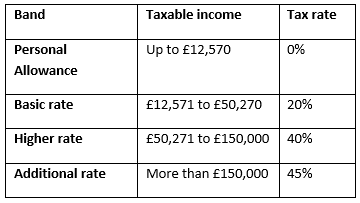
According to a report in Citywire, chancellor Rishi Sunak has drawn up plans to cut taxes ahead of the 2024 election, and Income Tax is one of his main targets. It’s suggested that not only will Sunak cut the basic rate of Income Tax by 2p but he will also scrap the top 45% Income Tax band. For the 2022/23 tax year, Income Tax bands are:

The reported cuts would mean that the basic rate of Income Tax would fall from 20% to 18%. This would save basic-rate taxpayers up to £750 a year.

If you’re an additional-rate taxpayer, the changes could significantly reduce your Income Tax bill. It would mean that earnings above £150,000 would be liable for Income Tax at a rate of 40% rather than 45%.

While your Income Tax bill would go down, scrapping the additional-rate tax band could harm your pension savings. Under the current rules, you can claim tax relief on your pension contributions at your nominal Income Tax rate.

So, if you’re an additional-rate taxpayer, it could mean your pension tax relief falls from 45% to 40%.

Sunak’s plans follow a report from the Office for Budget Responsibility that found the government’s tax hikes in the last two years, including a rise in National Insurance contributions, will mean the tax burden on the public will reach its highest levels since the 1950s.

How would scrapping the additional-rate tax band affect the economy?

With the UK government facing a black hole in its finances following the pandemic, you may think that cutting the highest rate of Income Tax could negatively affect the economy. You may assume it would mean the government would collect less in taxes, yet the opposite could be true.

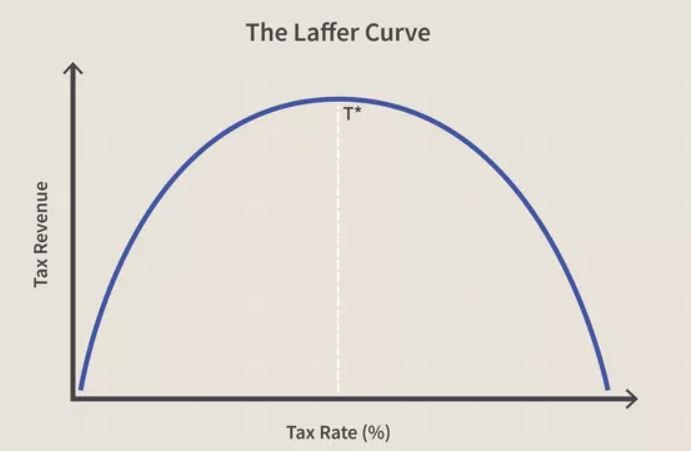
Economist Arthur Laffer developed the Laffer Curve theory, which shows the relationship between tax rates and the amount of tax collected by governments. It’s often used to support arguments that governments should cut tax rates to increase revenue.

The Laffer Curve argues that when taxes are too high, taxable activities, such as working or investing, are discouraged. So, while some people may pay a higher rate of tax, total tax revenue falls.

In contrast, lower tax rates could encourage more people to work and invest to grow their wealth as individually they’ll be liable for less tax. If lower taxes encourage this behaviour in the majority of the population, the government’s revenues increase. The graph below shows how the Laffer Curve theory has an optimal point for collecting the maximum revenue in taxes. After this point, despite taxes rising, tax revenue falls.

Source: Investopedia

So, could cutting the additional-rate Income Tax band increase tax revenue? The Laffer Curve theory suggests the answer could be “yes”, but it can’t be guaranteed.

The Laffer Curve theory isn’t without its critics, and some argue that it’s based on simplistic assumptions. The optimal point for maximising tax revenues also isn’t easy to calculate. It will depend on a huge variety of factors, some of which are likely to change over time.

Incorporating tax changes into your financial plan

While you can’t control what Sunak’s plans are or the outcomes of them, it’s still important to consider changes when reviewing or creating a financial plan.

A change to Income Tax rates and bands could mean you have more income to save, invest, or spend. But, on the other hand, as mentioned above, it could mean paying into your pension is no longer as tax-efficient.

We’re here to help you create a balanced financial plan and to offer advice when changes could affect you. Please contact us to discuss what steps you can take to minimise Income Tax and make the most of your money.

Please note: This blog is for general information only and does not constitute advice. The information is aimed at retail clients only.

Written by SteveB · Categorized: News

Mar 09 2022

Inheritance Tax receipts rise again. What can you do to minimise the bill?

Official figures show that the amount paid in Inheritance Tax (IHT) has increased again. As the IHT thresholds are set to remain the same despite rising inflation, more people will need to consider how IHT could affect what they leave behind for their families.

According to a report in FT Adviser, IHT receipts between April and November 2021 totalled £4.1 billion. It represents a rise of £600 million when compared to the same period a year earlier. HM Revenue and Customs (HMRC) also said it expects receipts to be higher over the next reporting period due to higher wealth transfers during the pandemic.

In addition to this, in 2021 the chancellor froze two key thresholds for IHT for five years. Usually, these allowances would increase in line with inflation but will now remain the same until 2026. For some families, this will mean they face a larger IHT bill when a loved one passes away.

If your estate may be affected by IHT, planning is important as there are often steps you can take to reduce how much IHT is paid on your estate.

The IHT nil-rate band for the 2022/23 tax year is £325,000 and will remain at this level until 2026. If the total value of your estate is below this threshold your estate will not be liable for any IHT.

If you will be passing on your main home to your children or grandchildren, you may also use the residence nil-rate band, which means you can pass on an additional £175,000 in the 2022/23 tax year before paying IHT. Again, this allowance is frozen until 2026.

Both of these thresholds are for individuals. So, if you’re estate planning with a partner, you could pass on up to £1 million without IHT being due. This is because a spouse or civil partner can pass on unused allowances to their partner.

If the value of your estate does exceed these allowances, the standard IHT rate is 40%. It can significantly reduce what you pass on to loved ones.

7 things to do if your estate could be liable for Inheritance Tax

1. Value your estate

To understand what steps you can take to reduce a potential IHT bill, you must first understand what is included in your estate and how much it is worth. Your estate includes most of your assets, from property to material goods, and it’s important to accurately value items to make an estate plan that’s right for you.

As well as considering the value of assets now, you should also think about how they may change during your lifetime. Your home, for instance, is likely to rise in value significantly. In 2021 alone, house prices increased by 9.7%, according to Halifax house price index data.

2. Write a will

Even if IHT isn’t a concern, you should write a will. It’s the only way you can ensure your wishes are carried out.

From an IHT perspective, a will can help you make full use of your allowances. For instance, leaving your home to your child in your will means you can use the residence nil-rate band.

3. Pass on gifts to your loved ones

Some gifts could be considered part of your estate when you pass away for up to seven years. These are known as “potentially exempt transfers”.

In contrast, there are some gifts that you can make that are considered outside of your estate straight away. Making use of these can allow you to pass on assets to loved ones without worrying if they’ll be included in IHT calculations.

These gifts include gifting up to £3,000 each tax year, known as your “annual exemption”, and small gifts of up to £250 to individuals. If you’d like to reduce a potential IHT bill through gifting, please contact us.

4. Create a charitable legacy

You can leave gifts to charities in your will. Any gifts that you leave to charities will be considered outside of your estate for IHT purposes. As a result, you can use these gifts to bring the total value of your estate under IHT thresholds while supporting good causes.

In addition, if you leave at least 10% of your entire estate to charitable causes, the rate of IHT you pay will fall from 40% to 36%. For some estates, this could mean leaving more to loved ones.

5. Place your assets in a trust

In some cases, placing some of your assets in a trust can make sense. Using a trust may remove some of your assets from your estate so they are not considered when IHT is calculated. You may still be able to benefit from the assets held in trusts, for example, taking an income from your investments.

There are several types of trust and once set up it can be difficult or impossible to dissolve a trust. So, as well as considering the financial aspect, you should consider taking legal advice before moving forward.

6. Take out a life insurance policy

A life insurance policy won’t reduce the amount of IHT due. However, it can provide your beneficiaries with a way to pay the bill.

A whole of life insurance policy will pay out a lump sum when you pass away. You will need to pay policy premiums or the cover will lapse. You should also have an accurate value of your estate and the amount of IHT that will be due to ensure that the lump sum will cover the full IHT bill.

It’s important to note that the life insurance policy must be written in trust. Otherwise, the payout will be considered part of your estate and the amount of IHT due could increase.

7. Arrange a meeting with us

Depending on your assets and wishes, there may be other options that are appropriate for you. Please contact us to arrange a meeting with a financial planner to discuss what steps you can take to reduce the amount of IHT due on your estate and pass on more of your wealth to loved ones.

Please note: This blog is for general information only and does not constitute advice. The information is aimed at retail clients only. The Financial Conduct Authority does not regulate tax or estate planning.

Written by SteveB · Categorized: News

  • « Previous Page
  • 1
  • …
  • 53
  • 54
  • 55
  • 56
  • 57
  • …
  • 87
  • Next Page »
Ashworth Financial Planning Ltd is authorised and regulated by the Financial Conduct Authority. You can find Ashworth Financial Planning Ltd on the FCA register by clicking here. Registered in England & Wales. Company number: 08401597. Registered Office: Unit 1-1A, Park Lane Business Centre Park Lane, Langham, Colchester, Essex, England, CO4 5WR.

© 2026 · Ashworth FP · Legal · Web Design by D*Haus Agency